
Iredell County Criminal Court Cases
Iredell County criminal court cases sit in one of two trial courts. Under G.S. 7A-271, Superior Court has exclusive original jurisdiction over felony trials. District Court begins cases below felony grade under G.S. 7A-272, subject to exceptions and limited power to accept some felony pleas. Both courts use the North Carolina Enterprise Justice system, also called Odyssey, and their public docket summaries appear in the eCourts Portal.
The Clerk of Superior Court is the record custodian for both levels. The official Hall of Justice page shows where that office operates.
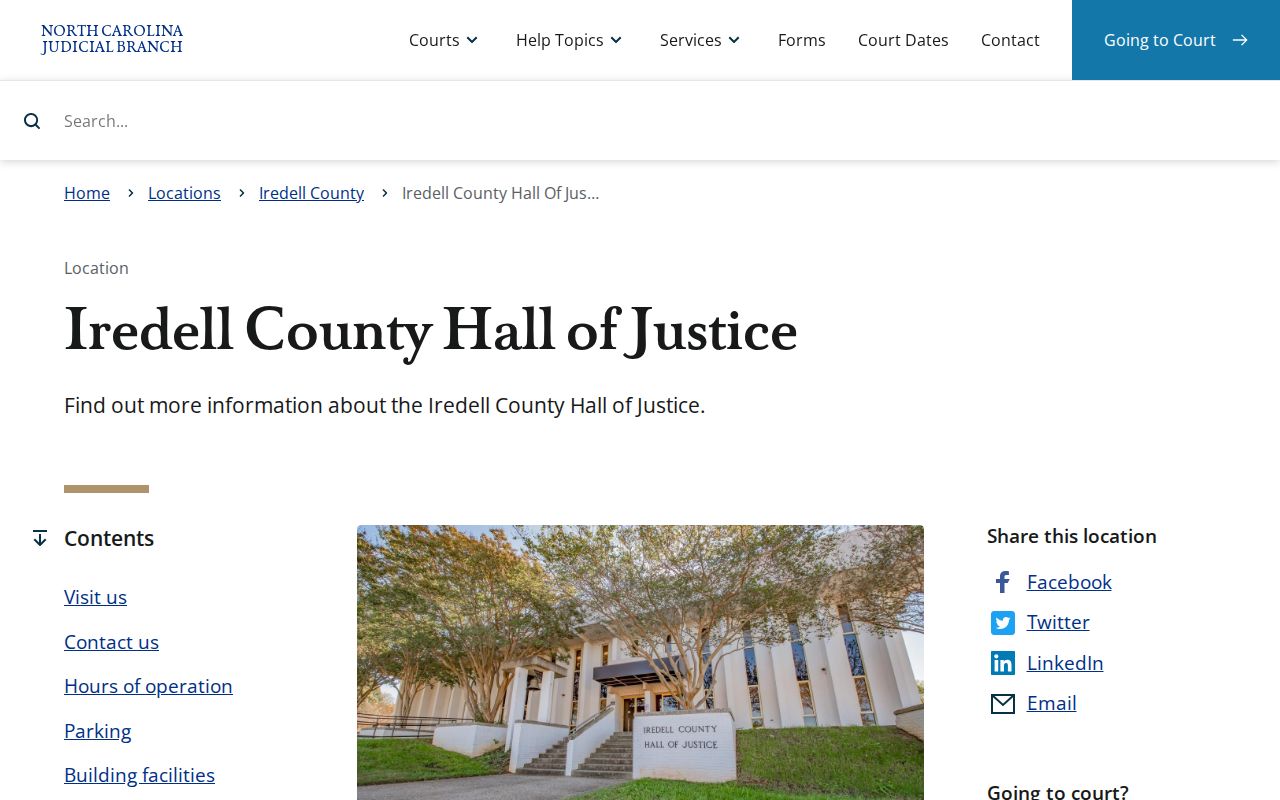
The Hall of Justice is therefore the physical fallback when an Iredell criminal case needs a clerk search, a paper-file review, or a certified record.
Iredell Court Roles by Charge
The court name signals more than a room assignment. A felony may begin with a first appearance in District Court, then move to Superior Court after indictment or another valid charging route. A misdemeanor normally stays in District Court. If a defendant appeals a District Court misdemeanor judgment, the next step is a new Superior Court trial, called a trial de novo. It is not the usual record-only review that many people expect.
Iredell County holds its main Superior and District sessions at the Hall of Justice in Statesville. Government Center South in Mooresville hosts District Court on Thursday and Friday plus administrative traffic court on Wednesday. The court system's Mooresville location page carries an important warning.
There is no Clerk of Court office at Government Center South. A person seeking an Iredell County case file should use the Statesville clerk rather than treating the Mooresville hearing venue as a full records counter.
Note: The court venue shown on a hearing notice may not be the office that can issue the related criminal case record.
Searching Iredell County Case Records
Start with the North Carolina eCourts Portal. It is free and allows anonymous access. Registration is optional and adds saved cases, not greater access to restricted material. The Iredell County filter is useful when a common name produces returns from across North Carolina. Case numbers follow a year, case type, sequence, and county-code pattern. When a full number is unknown, Portal permits a case wildcard after at least four characters. A name wildcard needs at least three surname characters and one first-name character before each asterisk.
- Open Smart Search and choose case number or party name.
- Enter the known identifier, using the official wildcard rules if needed.
- Apply the Iredell location, criminal case type, status, or filing-date filters.
- Open the result and read events, hearings, dispositions, and financial entries in context.
- Ask the Iredell clerk for the paper file or a certified search when the online summary is not enough.
A free public self-service terminal at a Clerk of Superior Court office provides another route. It can search criminal cases by defendant, case number, or victim or witness name, and the search can cover Iredell County or run statewide. Government Center South has no clerk office, so use the Hall of Justice for this records-counter fallback.
The Judicial Branch provides Portal training and field guidance for these controls.
Those official instructions help prevent narrow filters and malformed wildcards from hiding an Iredell criminal court case that is actually public.
| Field Label | Type | Required | Notes |
|---|---|---|---|
| Smart Search | Text | Yes | Defaults to case number or party name |
| Search Type | Dropdown | No | Case, party, business, or citation options |
| Location | Dropdown | No | Select Iredell County to narrow returns |
| Party Criteria | Fields | No | Name and date of birth controls |
| Case Criteria | Fields | No | Type, status, and filing-date range |
| Search Hearings | Portlet | No | Also accepts attorney, judge, or courtroom |
Smart Search and Iredell Judgments
Smart Search and NC Judgment Search answer related but different questions. Smart Search opens the broader case summary and register of actions. It is the better starting point for the sequence of filings, settings, hearings, and outcomes. Judgment Search adds a focused index with the case number, disposition status, index date and time, parties, and relevant judgment comments. A result in one layer should be checked against the other when the reader needs both history and final status.
Search Hearings is a third useful view. It can take a case number, party or business name, attorney name, bar number, judicial officer, or courtroom. It is useful for the current calendar, but it does not replace the full register of actions. Portal entries are near real time, yet the Judicial Branch directs anyone needing a formal background search to the clerk. That caution reflects differences among a live docket, an official file, and a certified county search.
Inside an Iredell County Case File
An Iredell County criminal case file records the prosecution after charges reach court. Portal's public structure includes the Case Summary or Register of Actions, Case Information, Assignment Information, Party Information, Case Events, Dispositions, Hearings, and Financial Information. Available documents and exact charge-line details can vary. The case number ties these parts together, while the register shows how the matter changed over time.
| Case number and court | Identifies the filing, venue, and trial-court level. |
|---|---|
| Charging document | Shows the accusation filed in court, such as an indictment, information, or complaint. |
| Case events | Lists filed actions, settings, motions, and other docket activity. |
| Hearings | Provides scheduled proceedings and available courtroom details. |
| Disposition | States the outcome for the case or an individual charge. |
| Judgment and financial data | Records the sentence and available court-ordered financial entries. |
An arrest charge and a filed court charge may differ. For that reason, readers tracing the outcome of an arrest should use the criminal docket and, when needed, the fuller Iredell County arrest lookup context rather than treating either record as the whole story.
Read Iredell Criminal Case Actions
Docket terms can obscure a simple result. A disposition is the outcome of a charge. An arraignment is a proceeding where charges are addressed and a plea may be entered. An acquittal means a not-guilty outcome, while a dismissal ends the charge without a conviction. Nolle prosequi means the prosecutor declines to proceed at that time. A deferred prosecution or conditional discharge delays prosecution or judgment under set terms and may lead to dismissal.
- Indictment
- A grand-jury accusation ordinarily used to place a felony in Superior Court.
- True bill
- The grand jury returned the indictment; a no bill means it did not.
- Disposition
- The recorded outcome of a case or charge.
- Trial de novo
- A new Superior Court trial after a District Court misdemeanor appeal.
- Concurrent sentence
- Terms run together; consecutive terms run one after another.
Read each term beside its date and charge line. One count can be dismissed while another ends in judgment. A case-level label alone may therefore miss the detail that matters most.
How a Criminal Case Moves
The clerk's register turns a legal process into a dated sequence. The path can change with dismissal, waiver, indictment, plea, or trial, but the central flow remains recognizable. District Court may handle early felony proceedings even when Superior Court will try the felony. The District Attorney prepares the criminal trial docket and decides how the State proceeds, while the court enters hearings, orders, outcomes, and judgment.
Case flow: Charges Filed › Arraignment › Pretrial › Plea or Trial › Disposition › Sentencing
The flow is not a promise that every case reaches every step. A dismissal may end the matter early. A plea can replace trial. Sentencing follows a conviction, not a mere filing. Dates in Portal should also be checked against current calendars when attendance is required.
Certified Iredell Criminal Case Searches
A certified Iredell-only name search is available through Form AOC-CR-314. The fee is $25, and a person may request the search for oneself or another person. This is a county search, not the fingerprint-supported statewide Right to Review maintained by the North Carolina State Bureau of Investigation. The Judicial Branch background-check instructions explain that distinction.
The official route matters when a free Portal summary does not meet the need for a clerk-certified Iredell County criminal case search.
The Iredell court payment page says mail requests accept a money order or certified check payable to the Iredell County Clerk of Superior Court. In-person payments may be made with cash, a supported credit or debit card, money order, or certified check. Personal checks are not accepted. The local page does not post a per-page or certified-copy tariff, so call the clerk rather than assuming a copy price.
Iredell Clerk of Superior Court
226 Stockton Street
Statesville, NC 28677
704-832-6600
Monday through Friday, 8:00 a.m. to 5:00 p.m.
Iredell District 32 Court Work
The District Attorney prosecutes District and Superior Court criminal cases and prepares the criminal trial docket for Prosecutorial District 32, which covers Iredell and Alexander counties. The official District 32 office page identifies that role and the local schedule.
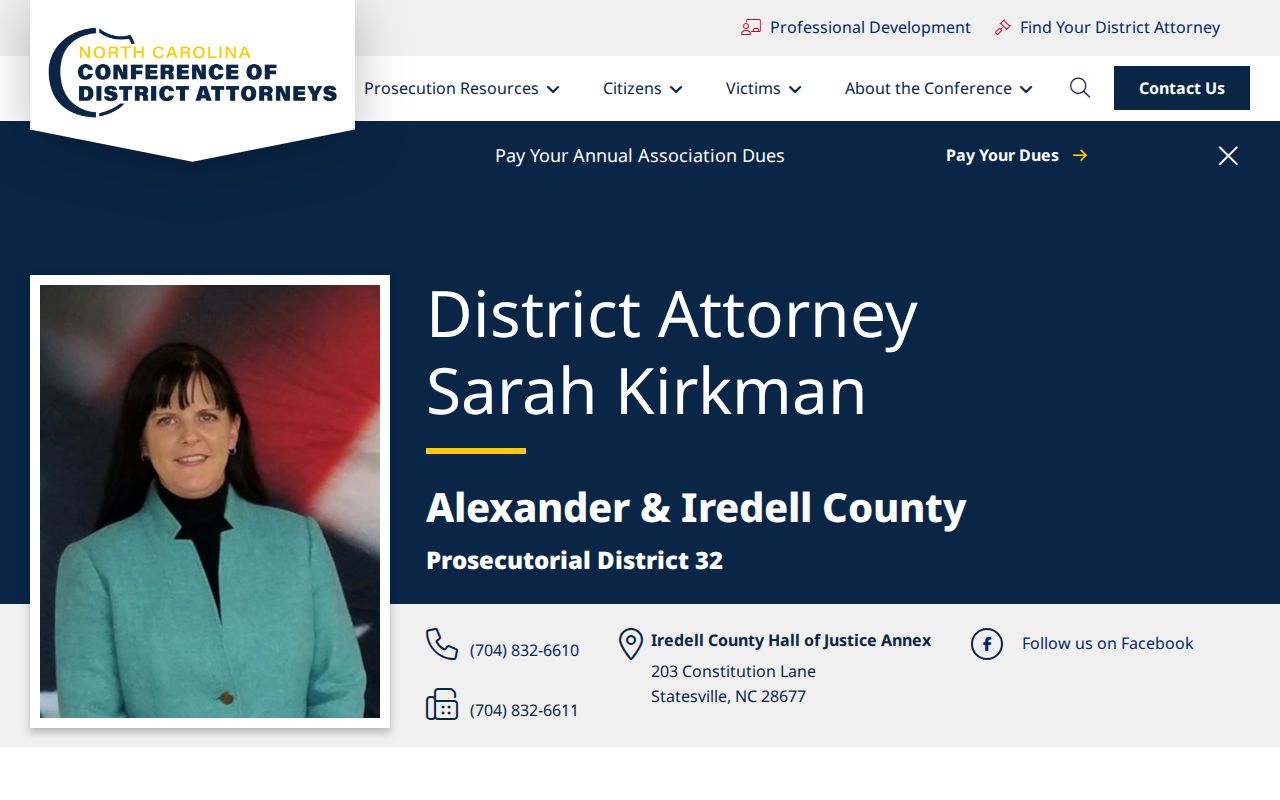
This prosecutorial work explains why a booking allegation can change before it appears as a filed Iredell criminal court charge.
Defender District 32 is also local to Alexander and Iredell. Its public defender office began in 2024. A person charged with an offense may request appointed counsel and provide financial details under oath so a judge can decide eligibility. Conflicts or capacity limits can lead to appointment of private counsel instead. Those representation records belong to the court process, but attorney communications themselves are not public case-file content.
Case Record Access & Restrictions
G.S. 7A-109 generally opens clerk-maintained criminal actions, dockets, indexes, and judgments during regular office hours unless another law restricts access. That does not make every item visible online. Juvenile, sealed, and expunged matters are restricted, and protected identifiers must be removed. Older documents created on paper before Odyssey conversion may remain available only through the clerk.
The official court-record request guidance covers terminals, paper files, copies, and audio.
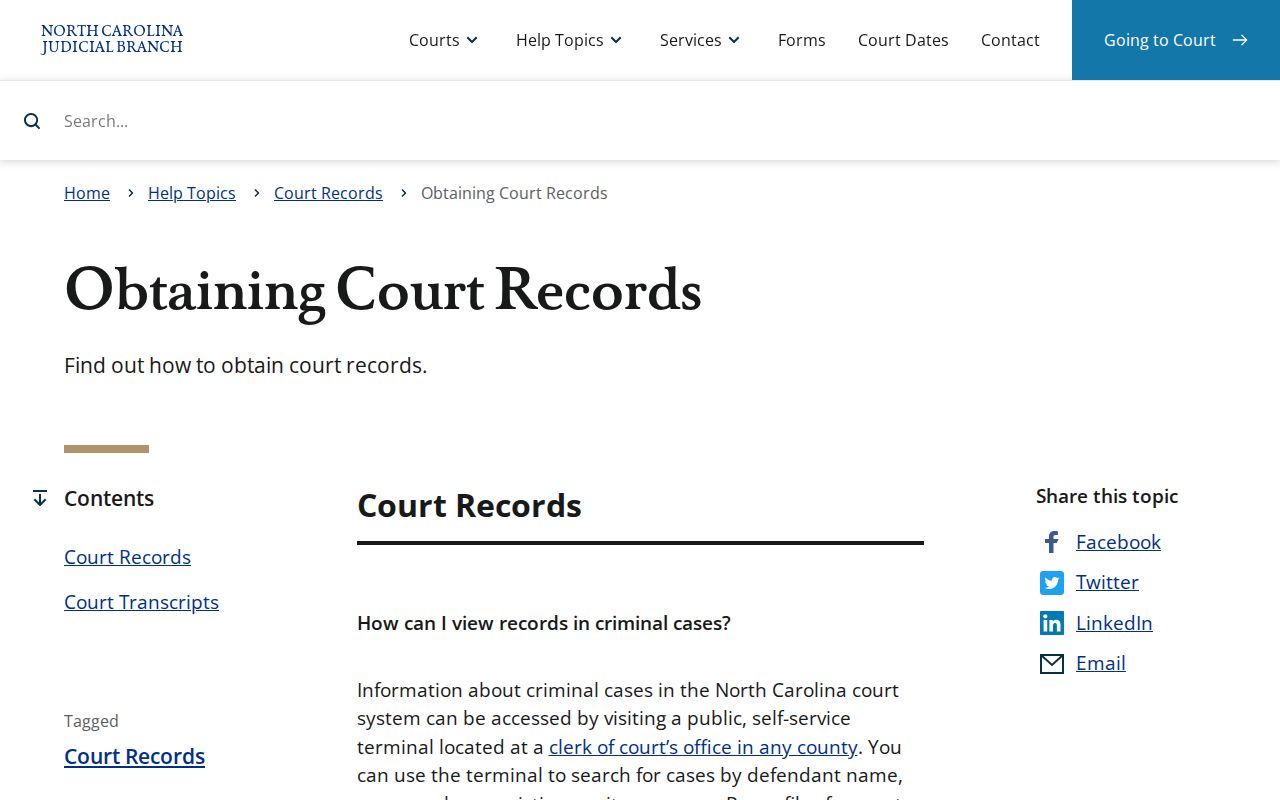
For available nonconfidential audio, use Form AOC-G-114 and pay the actual CD cost. Confidential proceedings require permission through AOC-G-115. Criminal District Court proceedings are generally not recorded except certain Class H or I felony pleas unless a judge orders recording.
If an expected Iredell case is absent, confirm spelling and wildcards, try the courthouse terminal, and ask the clerk about paper or restricted material. A missing public result is not proof that no underlying event occurred.